






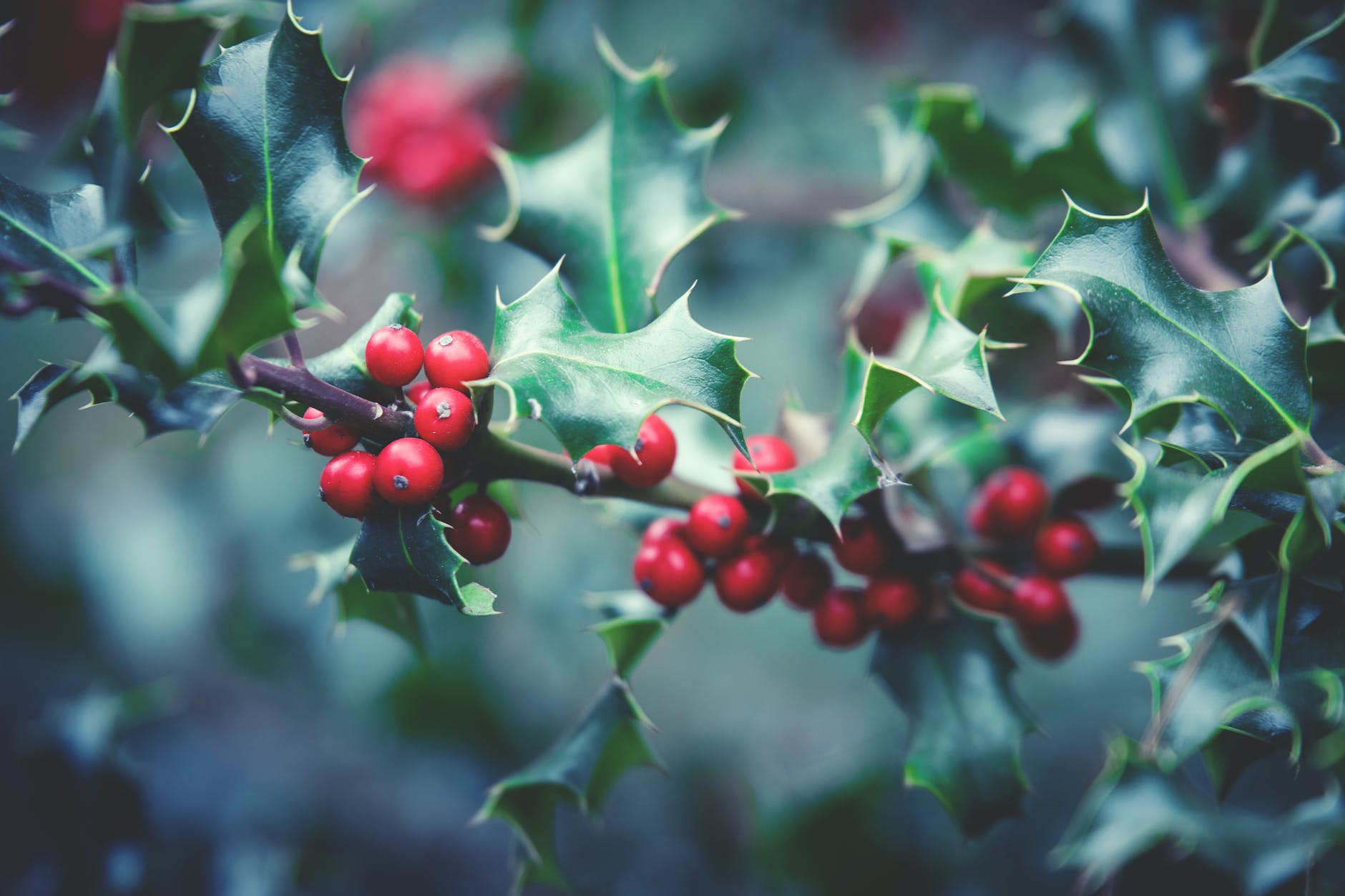
This month we’re taking a look at some of the plants we associate with the season. What’s so special about the herbs we decorate our homes and communities with each December? We’re taking a look at mistletoe, holly, and frankincense to understand a little more.

Mistletoe
We all know that mistletoe is there to add a little romance to our lives each December. If you find yourself with a loved one under this precious plant in December, you’ll likely get a kiss planted on you. But there’s so much more to mistletoe.
Mistletoe is a sacred plant in Celtic tradition. It grows on trees and needs them to survive, unable to live on its own. Its most important function in pagan culture was as a healing herb. It was used—and still is today—to treat a wide variety of ailments. Today, we strongly advise speaking with an expert before considering internal use as it can be toxic. However, we strongly encourage you to dive into the spiritual and communal properties of mistletoe.
Keep this aerial plant on an altar as a guide toward peace and a reminder to seek friendly relations with all those who cross your path. Hang it at Christmas-time to encourage consensual kisses. Use it as a focal point for healing meditation with in you spiritual practice.
Holly

Holly is another plant revered by the ancient Druids. It was thought to bring good luck and protection when hung in the home. Pagans in the Mediterranean area associated holly with Saturn, the same planetary deity which rules over Capricorn, the zodiac sign of late December through mid-January. It was used as decor during Saturnalia celebrations around the time the Sun moved into Capricorn.
While holly has been brewed in teas as an emetic (something to help someone vomit after ingesting something toxic), there are not a lot of modern therapeutic uses for the plant. We still recommend hanging it around your house as a reminder of the many traditions that have built the symbolic landscape we enjoy each December.
Frankincense

Frankincense is actually not an herb but the resin of the Boswellia tree. Its name means “true incense,” emphasizing its purity. Frankincense is widely recognized for its appearance in the Christian nativity story as one of the gifts brought to the baby Jesus by the three wise men. The resin is used as a fragrance and burned as incense. It has been used for over 5,000 years and can be purchased at local apothecaries and shops today.
Frankincense is a vital part of many ancient rituals from Egyptian mummification to cleansing sacred spaces. It also holds medicinal properties. It can be ingested or used topically for its anti-inflammatory properties. It’s also thought to assist with gut and respiratory health.
Remember that sacred plants are highly vulnerable. Before buying any frankincense, look into the source to make sure your Boswellia trees are being sustainably grown and harvested by communities who are connected to the plant’s tradition.
Leave a Reply